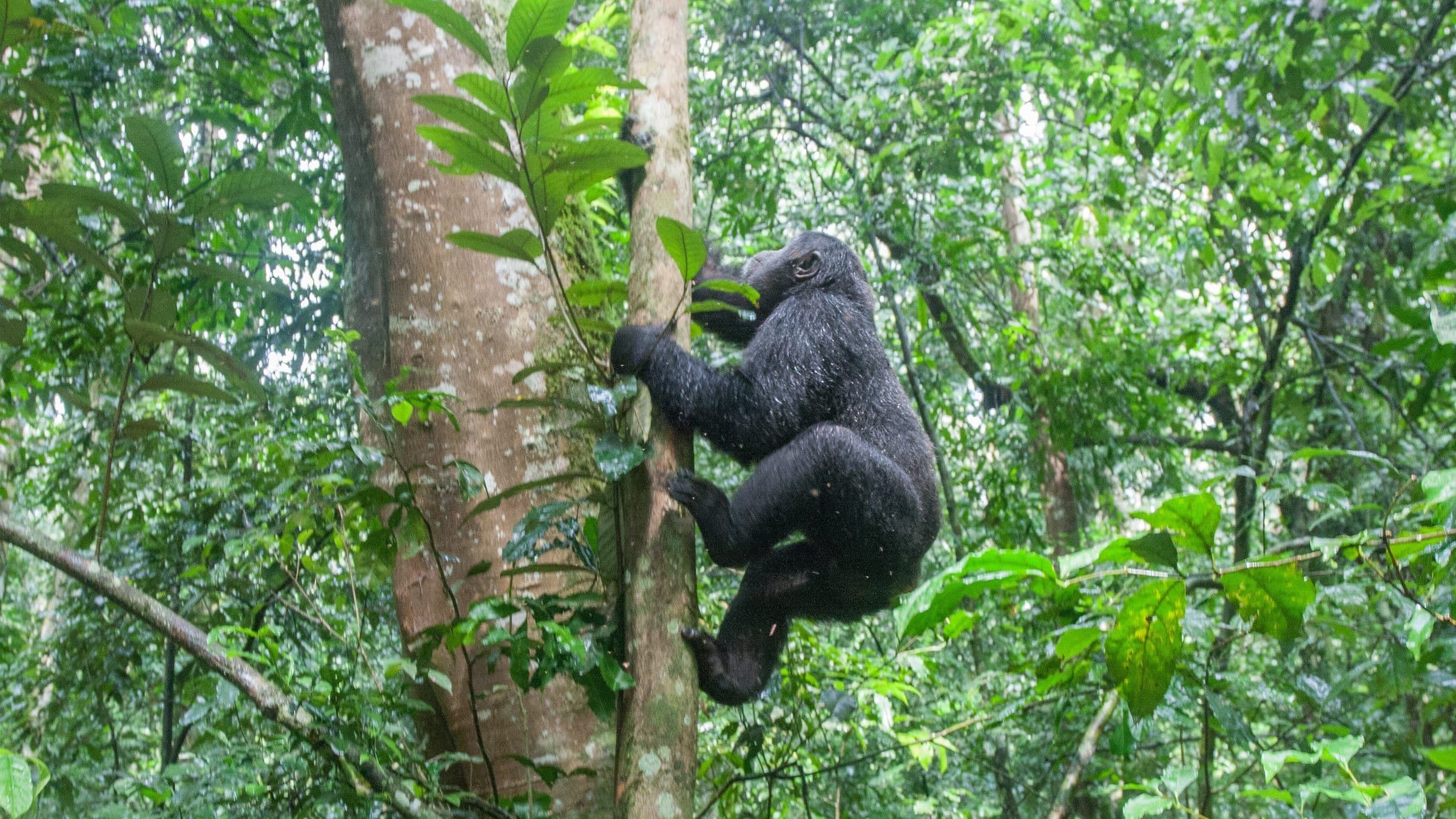
Renowned as the Primate Capital of Africa, Kibale Forest National Park is a tropical paradise and primate sanctuary to 13 primate species including the largest population of chimpanzees in East Africa. Sprawling an expanse of 766 square kilometres, Kibale Forest National Park is renowned for its rich biodiversity and primate populations. The rainforest features lush landscapes, moist evergreen rainforests, lowland and montane forests, and diverse habitats supporting incredible flora and fauna.
Kibale Forest National Park was initially gazetted in 1931 as a logged forest reserve and in 1993 was formally established as a national park to safeguard its invaluable biodiversity. The park forms a vital 180-kilometre wildlife corridor with Queen Elizabeth National Park, ensuring the free movement of animals between these two Uganda national parks.
Location and Geography
Kibale Forest National Park is situated in western Uganda, approximately 348 kilometres — a drive of about 5 hours — from Kampala. The park lies 26 kilometres southeast of Fort Portal, Uganda's Tourism City, making it an easily accessible destination for travellers on a Uganda safari. The park's terrain encompasses gently undulating hills and valleys with varying altitude ranging from 1,100 metres to 1,600 metres above sea level. Its strategic location within a large ecosystem — including the Rwenzori Mountains to the west and Queen Elizabeth National Park to the south — creates a vital wildlife corridor allowing animals to roam freely and maintain genetic diversity.
Wildlife and Biodiversity
Kibale Forest is a sanctuary to 13 primate species including a large population of over 1,500 chimpanzees. These fascinating creatures share 98% of their DNA with humans, offering a unique window into our own evolutionary past. Other notable primates include red colobus monkeys, black-and-white colobus monkeys, L'Hoest's monkeys, blue monkeys, olive baboons, grey-cheeked mangabeys and bushbabies. The park is also home to leopards, African golden cats, forest elephants, African buffalo, bushbucks, sitatungas, giant forest hogs and numerous smaller mammals.
Birds in Kibale Forest National Park
Kibale Forest National Park is home to exceptional birdlife with 325 recorded species, including several regional endemics and rare species such as the olive long-tailed cuckoo, western tinkerbird, African Pitta and grey parrot. Other notable species include the Black-and-white Casqued Hornbill, Black-billed Turaco, African Emerald Cuckoo, Black Bee-eater and African Wood Owl among many others.
Safari Activities in Kibale Forest National Park
Chimpanzee trekking is the premier activity — offered in morning sessions (8:00 am) and afternoon sessions (2:00 pm), taking anywhere from 30 minutes to 4 hours depending on the movement of the chimpanzees. Visitors spend one full hour with the habituated troop observing them play, feed and groom each other. A chimpanzee permit costs USD 300 per person for foreign non-residents. The Chimpanzee Habituation Experience is a full-day alternative in which visitors spend 4 hours with a semi-habituated family alongside scientists and researchers.
Guided nature walks lead through various regions of the park, revealing diverse bird species and primates including black-and-white colobus monkeys. The adjacent Bigodi Wetland Sanctuary — a community conservation project — adds exceptional forest birding and further primate encounters to any visit.
Best Time to Visit
The dry season (June to September, December to February) is the best time for chimpanzee trekking and hiking as trails are drier and easier to navigate. The wet season (March to May, September to November) is ideal for bird watching when abundant food sources attract more species including migratory birds.
Where to Stay
Accommodation options range from budget to luxury and include Ndali Lodge, Primate Lodge Kibale, Turaco Treetops, Crater Safari Lodge, Isunga Lodge, Chimpanzee Forest Guest House and Kibale Forest Camp.