
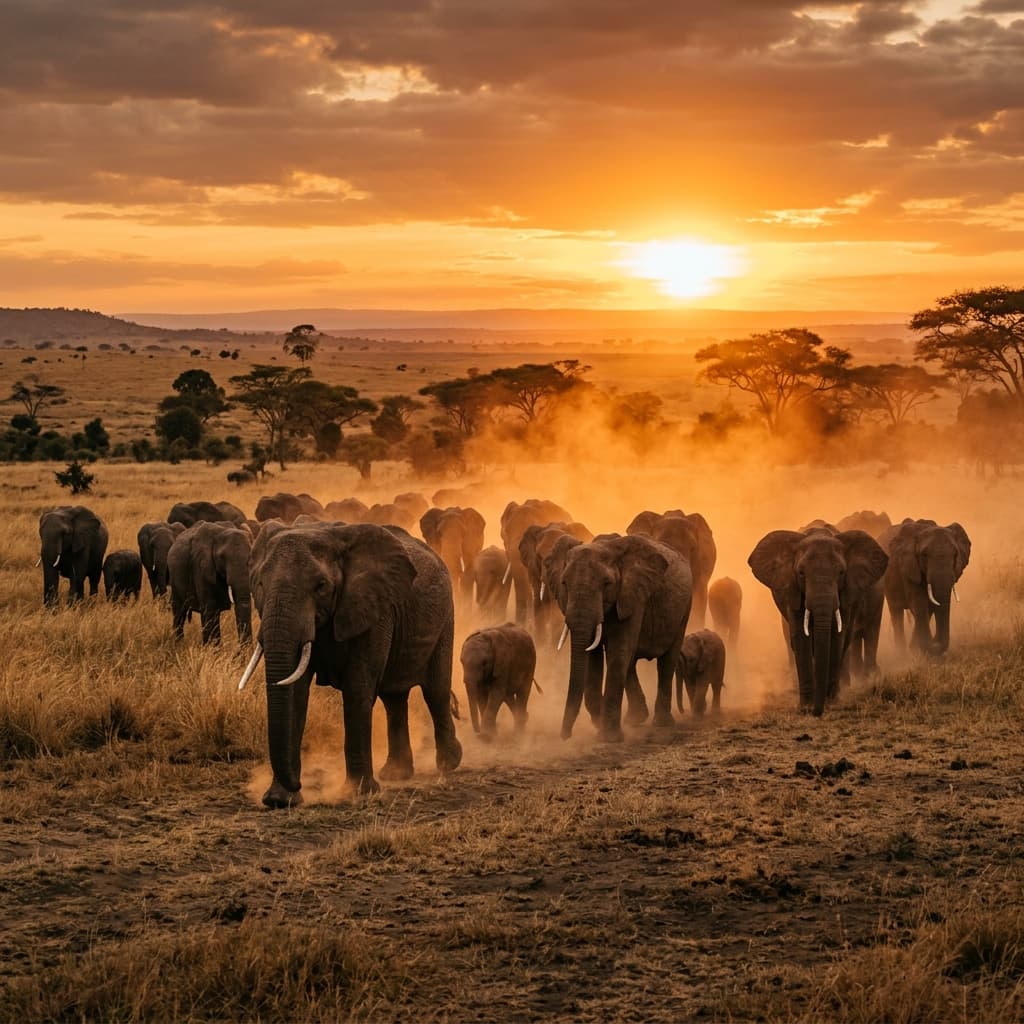
Eco-Dynamics of the Mara.
The Maasai Mara's ecological balance is governed by a set of interlocking pressures that most visitors never see from the vehicle window. The relationship between lion prey density, wildebeest movement, and the hydrology of the Mara River forms a dynamic system sensitive to shifts that, in some cases, originate hundreds of kilometres away in the highlands of Tanzania.
Our team spent the last dry season mapping vegetation die-off corridors using drone transects — a technique that allows us to measure grass biomass at a resolution of roughly 2 square metres. The results were sobering: overgrazing pressure from resident livestock at the conservancy boundaries has pushed the grass line back nearly 300 metres in some sectors since our last survey in 2023.
The implications for lion territory are significant. As the short-grass plains recede, the ambush vegetation that female lions depend on for successful stalks compresses, concentrating hunting activity into fewer corridors. This in turn increases human-wildlife conflict at the pastoral boundaries. The solution is not simple — but understanding the mechanism precisely is the first step toward managing it.
For our expedition guests, this ecological complexity is part of what we try to communicate. A game drive is not just an animal encounter. It is a window into a system of extraordinary, precarious balance.